Proscribed Meaning: Definition, Real Examples, and Legal Implications
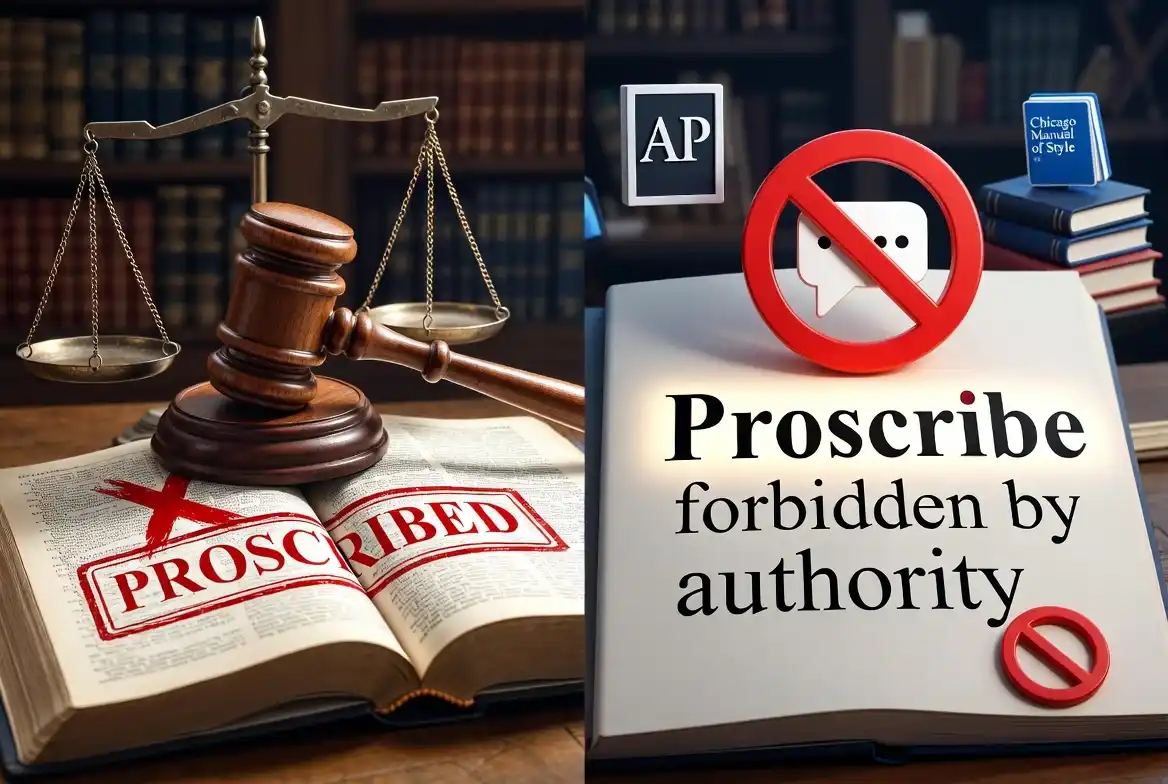
You hear “proscribed” in legal notices, grammar debates, and corporate policies. Most people mix it up with “prescribed” and stumble into serious errors. A wrong word can void a contract, offend an audience, or even attract legal penalties. This guide clears up exactly what proscribed meaning entails. You will walk away with sharp definitions, concrete examples from law and language, and the confidence to use the term correctly every time.
What Does “Proscribed” Actually Mean?
The word “proscribed” comes from the Latin proscribere, meaning to publish in writing, often with a sense of condemnation. Today, proscribed meaning centers on something that is officially forbidden, condemned, or outlawed. When an authority says a word, action, or substance is proscribed, it declares it unacceptable and often sets consequences for its use.
Merriam-Webster defines “proscribe” as “to condemn or forbid as harmful or unlawful.” The Oxford English Dictionary traces its historical use back to Roman practices of publishing the names of citizens sentenced to death or exile. That origin still colors the modern proscribed meaning — it carries a weight of formal prohibition, not just a casual dislike. Understanding this root makes it easier to separate proscribed matters from simple preferences.
Proscribed Meaning in Linguistics: When Words Become Forbidden
Linguists use proscribed meaning to label words, phrases, or grammatical structures that language authorities explicitly condemn. Style guides, academic institutions, and editorial boards compile lists of proscribed terms they consider incorrect, offensive, or substandard.
Examples include double negatives (“I don’t need no help”), certain slang terms once banned in formal writing, and outdated ethnic labels that society now rejects. The Chicago Manual of Style regularly updates its list of proscribed usages. David Crystal, in The Stories of English, explains that linguistic proscription reflects power — those who control publishing and education decide which forms get banned. When you encounter a proscribed term in a style guide, you see a linguistic rule enforced from above, not a description of how people actually speak.
Proscribed vs. Prescribed: The Key Distinction You Must Know
Many errors happen because “proscribed” and “prescribed” sound similar yet hold opposite meanings. Prescribed meaning points to something recommended, required, or set down as a rule. Proscribed meaning targets what is forbidden or condemned.
| Aspect | Proscribed | Prescribed |
| Core Meaning | Forbidden, condemned | Required, recommended |
| Legal Context | Outlawed acts, banned substances | Mandated procedures, compulsory steps |
| Language Use | Words style guides condemn as errors | Words and forms style guides require |
| Example | Double negatives are proscribed in formal English | Subject-verb agreement is prescribed by grammar rules |
| Consequence | Using a proscribed term can cause rejection or penalty | Ignoring a prescribed form may lead to misunderstanding or noncompliance |
Confusing the two leads to costly misunderstandings. A company policy that proscribes personal device use means you must not use your own phone; a policy that prescribes a specific security app means you must install it. Grasping this distinction sharpens your reading of legal documents, manuals, and editorial guidelines.
Legal Proscribed Meaning: Acts, Substances, and Conduct Banned by Law
In law, proscribed meaning carries the full force of government authority. Legislatures pass statutes that proscribe certain behaviors, substances, and associations. When an act is legally proscribed, committing it triggers prosecution, fines, or imprisonment.
The UK Terrorism Act 2000 maintains an official list of proscribed organizations. Belonging to or supporting a group on that list is a criminal offense. Drug enforcement agencies worldwide publish schedules of proscribed substances — chemicals you cannot possess, manufacture, or distribute without authorization. Even financial regulations proscribe activities like insider trading and money laundering. Lawyers reading a statute interpret proscribed conduct as strictly illegal, with no room for personal discretion.
This hard legal line separates proscribed meaning from milder terms like “discouraged” or “frowned upon.” Legal proscription demands compliance, and ignorance of a proscribed act rarely works as a defense.
How Cultural Norms Shape Proscribed Behaviors and Language
Culture creates its own proscribed meanings that operate outside courtrooms. Social groups, communities, and workplaces designate certain words, gestures, or behaviors as unacceptable. These cultural proscriptions shift over time and differ across regions.
Taboo words provide a clear example. A term considered harmless in one decade can become proscribed in the next as awareness of offensive connotations grows. Corporate cultures often proscribe gossip, harassment, and specific language in official communications to maintain respectful environments. Even dining etiquette involves proscribed actions — placing chopsticks upright in rice is proscribed in several East Asian cultures due to funeral associations.
Recognizing cultural proscribed meaning saves you from unintended offense and helps you navigate diverse social contexts with respect.
Real-World Examples of Proscribed Terms Across Different Contexts
Seeing proscribed meaning in action builds practical understanding. Here are concrete examples from varied fields:
- Language and Style: Split infinitives once faced heavy proscription. Modern guides now relax this rule, yet some editors still proscribe “to boldly go” in formal documents.
- Employment Policies: A company handbook often proscribes the use of discriminatory language, personal social media during work hours, and sharing confidential data.
- Public Notices: Signs in national parks proscribe feeding wildlife, lighting fires outside designated areas, and removing plants.
- Sports Regulations: Athletic associations proscribe performance-enhancing drugs and certain equipment modifications to maintain fair play.
- Online Platforms: Social media community guidelines proscribe hate speech, harassment, and the posting of violent content, with automated removal and account suspension.
Each example shows an authority setting a boundary. Crossing that boundary triggers specific, stated consequences.
The Role of Proscribed Meaning in Legal Documents and Statutes
Drafters of legislation and contracts choose words with surgical precision. They use “proscribed” to eliminate ambiguity. When a lease states that “subletting without written consent is proscribed,” tenants cannot argue they merely misunderstood a suggestion. The word locks in a clear prohibition.
Statutory interpretation relies heavily on proscribed meaning. Judges look at proscribed conduct clauses to determine legislative intent. If a new law proscribes “operating a vehicle while using a handheld device,” courts will enforce that ban strictly, relying on the ordinary meaning of each word. Lawyers advise clients to scan for the word “proscribed” in compliance checklists — it signals a hard stop, not a gray area.
Why Understanding Proscribed Meaning Matters for Clear Communication
Misusing “proscribed” muddies your message and can damage credibility. Imagine a manager writing that “overtime is proscribed” when they mean “overtime must be approved.” Employees could interpret that as a total ban and refuse necessary extra work. Or a journalist reporting that a court “prescribed” a group instead of “proscribed” flips the meaning and misinforms the public.
Strong communicators use proscribed meaning to set unmistakable boundaries. It leaves no room for negotiation. When you need to communicate a ban, “proscribed” delivers more authority than “not allowed” or “don’t.” That precision builds trust with readers who rely on your words to make decisions.
Common Misconceptions About Proscribed Definitions
A few myths surround proscribed meaning and cause persistent errors.
- Myth: “Proscribed” and “prescribed” are interchangeable in formal writing.
Fact: They are antonyms. Mixing them reverses the intended meaning. - Myth: Only governments can proscribe something.
Fact: Any authority — a school, an employer, a professional body — can proscribe actions or language within its domain. - Myth: Something proscribed is always illegal nationwide.
Fact: An internal policy can proscribe conduct without involving the criminal justice system. - Myth: If a word is proscribed by one style guide, it is universally banned.
Fact: Proscription often varies by region, publication, and context. What the AP Stylebook proscribes, another guide may permit.
Clearing these misconceptions helps you apply the term accurately in your own work.
How to Identify Proscribed Elements in Contracts, Policies, and Regulations
Spotting proscribed meaning quickly saves time and legal risk. Use this practical scanning method:
- Look for the word “proscribed” itself. It often appears in definitions or prohibition sections.
- Watch for absolute negative language: “must not,” “is prohibited,” “shall not under any circumstances.”
- Check schedules and appendices. Many documents list proscribed items, substances, or organizations in attached tables.
- Review penalty clauses. Sections describing fines, termination, or legal action usually link back to proscribed behavior.
- Consult the definitions section. Legal documents define “proscribed conduct” or “proscribed material” with precise scope.
When you find a proscribed element, highlight it and note the associated consequence. Share this with your team so everyone respects the boundary.
Practical Tips to Avoid Using Proscribed Language in Professional Writing
Professional writing demands awareness of ever-shifting language standards. Follow these steps to keep your words compliant and respectful.
- Subscribe to a current style guide (AP, Chicago, or your organization’s house guide) and review its list of proscribed terms annually.
- Use inclusive language checkers that flag outdated or offensive terminology.
- Before publishing, ask a colleague from a different background to review the text for unintended proscribed meanings.
- Read industry regulations — financial services, healthcare, and legal fields frequently update lists of proscribed phrases in client communications.
- Keep a personal glossary of words your editor or compliance team has flagged in the past. Update it as norms change.
These habits protect your reputation and help you communicate with clarity and integrity.
Frequently Asked Questions About Proscribed Meaning
What is the simple definition of proscribed meaning?
Proscribed meaning describes something that an authority formally forbids, condemns, or declares unacceptable — whether a word, an action, or a substance.
How is proscribed meaning different from prescribed meaning?
Proscribed meaning refers to a ban; prescribed meaning refers to a requirement or strong recommendation. They are direct opposites.
Can you give an example of a proscribed term in English?0
Many style guides proscribe the use of “irregardless” as a nonstandard form. They require “regardless” instead.
Is proscribed meaning only used in legal contexts?
No. Legal systems use it heavily, but editors, employers, social groups, and online platforms all proscribe certain words and behaviors according to their own rules.
Why do words become proscribed in society?
Words become proscribed when they carry offensive historical baggage, violate evolving norms of respect, or are deemed grammatically incorrect by influential language authorities.
How can I check if a term is proscribed in a specific document?
Search the document for the word “proscribed,” review the definitions and prohibition sections, and examine any penalty or enforcement clauses linked to banned conduct or language.
Your Next Step Toward Precision
Now that you own a clear, usable understanding of proscribed meaning, put it to work immediately. Review the next contract, policy memo, or content draft you touch. Hunt for any place a ban must be airtight and deploy the word with confidence. Spotting the difference between proscribed and prescribed will save you from embarrassing reversals and potential liability. If you found this guide valuable, share it with a colleague who drafts policies or edits professional copy. Want more deep dives into language that shapes your rights and responsibilities? Bookmark this resource and check back for upcoming pieces on legal terminology and communication clarity.