Com Tam Dac Biet
Let’s talk about Com Tam Dac Biet. Right now. Forget fancy. Forget quiet. This is a plate of food that shouts. It’s the ultimate lunch in Saigon. The king of the plastic stool. A beautiful, messy puzzle of flavors and textures. Com Tam Dac Biet means “special broken rice.” But “special” doesn’t even scratch the surface. It’s a full experience. A symphony on a steel plate. You don’t just eat it. You dive in. You get your hands a little dirty. You taste a whole city in one bite. This isn’t just food. It’s a story. A story of making something incredible from what others might overlook. Let’s crack it open.
From Humble Grain to Culinary Star
The story starts with the rice. Not the perfect, long grains. The broken ones. The little pieces. In the old days, these were leftovers. The bits that didn’t make the cut for fancy dinners. Someone smart, probably in a hot kitchen with zero waste, said, “Let’s cook this.” Genius. They steamed these fragments. Something magical happened. The broken rice became its own thing. Sticky. A bit chewy. It soaks up sauce like a dream. It’s the ultimate underdog tale. The scrappy little grain that could. It’s the perfect base. It doesn’t fight the other flavors. It hugs them. This is foundational brand storytelling. It’s about identity. The rice tells you: beauty is in the imperfect. Value is in the resourceful. Every grain has a place. This mindset built a nation’s favorite dish.
- The rice is the canvas.
- The toppings are the bold, wild paint.
- Together, they create edible art.
You see this everywhere now. From a grandma’s home kitchen to a shiny restaurant chain. The conversion optimization is simple. You see the plate. You smell it. You’re hooked. No complicated menu needed. The user intent is pure hunger and satisfaction. The dish delivers. Every single time.
Deconstructing the “Dac Biet” – The All-Star Lineup
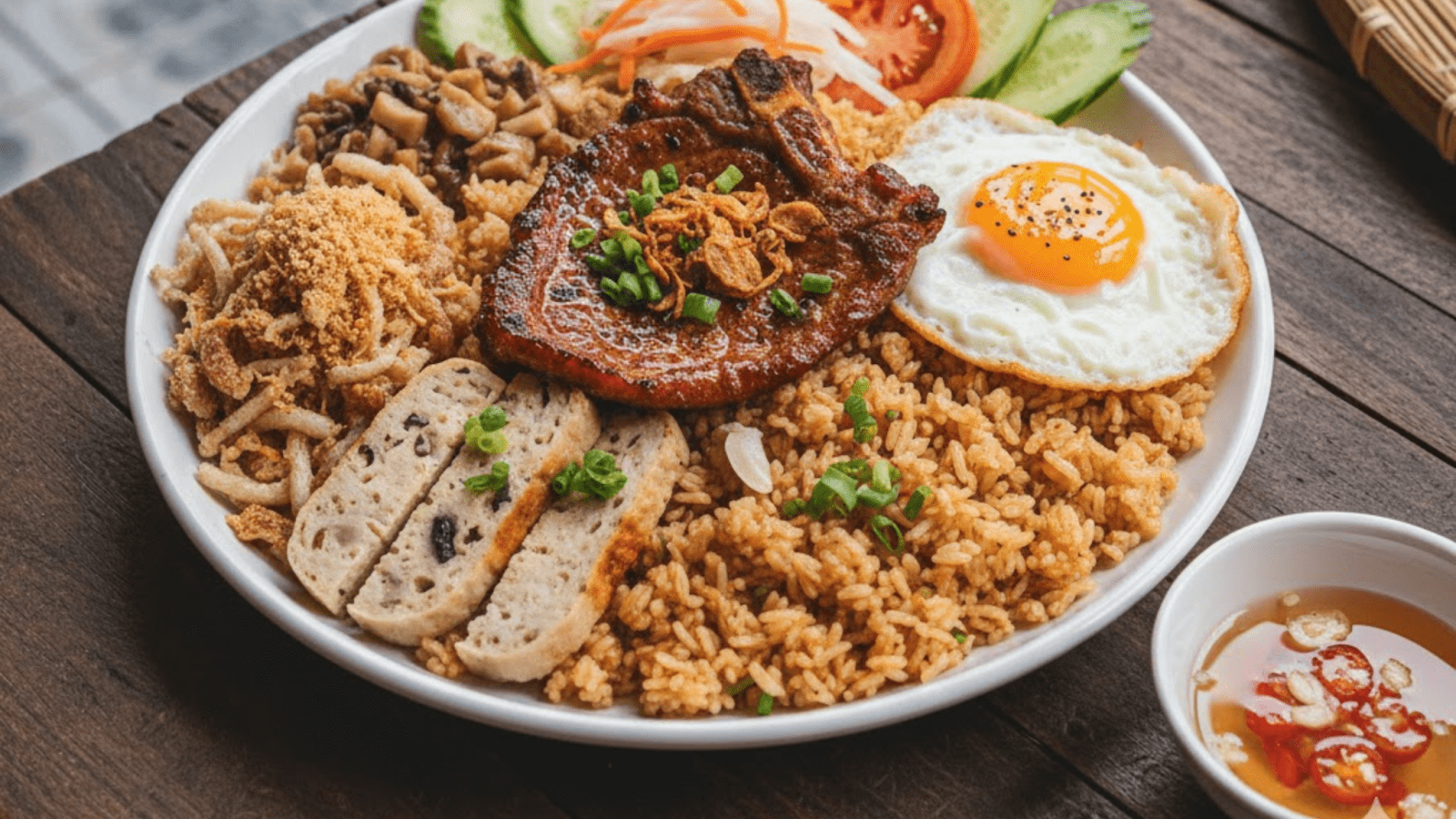
So what’s on this legendary plate? The Com Tam Dac Biet is a team of champions. Each player has a role. Miss one, and the balance is off. Here’s the starting lineup.
The Superstar: Suon Nuong (Grilled Pork Chop).
This is the headliner. A thin, marinated pork chop, grilled over charcoal. The marinade is the secret sauce. Fish sauce, sugar, garlic, shallots, a touch of caramel color. It’s sweet. It’s salty. It’s smoky from the fire. The edges are sometimes slightly charred. That’s flavor. That’s the sensory cue you want. The meat should be tender. Juicy. It’s the anchor of the whole operation.
The Crispy Legend: Bi (Shredded Pork Skin).
Don’t be scared. This is texture heaven. Pork skin, boiled, then shredded super fine. It’s tossed with roasted rice powder. This gives it a nutty, toasty flavor. The texture? Imagine the lightest, most delicate crunchy thing you’ve ever eaten. It’s like savory fairy dust. It adds a gritty, specific detail that makes the plate sing.
The Rich Uncle: Cha Trung (Steamed Pork and Egg Patty).
This is the comfort blanket. A steamed loaf made from minced pork, clear noodles (miến), and sometimes wood ear mushrooms. It’s soft. It’s savory. It’s like a warm, meaty hug. It balances the char of the pork chop and the crunch of the bi. Every bite needs a little bit of everything.
The Supporting Cast:
The plate isn’t done. You get a pile of fresh, sliced cucumber and tomato. Maybe some pickled vegetables (đồ chua). This is the fresh, crisp counterpoint. It cleans your palate. Then, the glue. The nuoc mam cham. The Vietnamese dipping sauce. Fish sauce, lime, sugar, water, chili, garlic. This sauce is liquid gold. You pour it over everything. It ties the whole wild party together.
The Ritual of Eating – It’s a Hands-On Affair
You have the plate. Now what? You don’t just pick up a fork. There’s a method. A beautiful, chaotic method. First, you look. Admire the layout. Then, you attack. Break the pork chop with your spoon and fork. Mix a bit of rice with a piece of meat. Grab some bi. Get a slice of cucumber. Pile it all on your spoon. Drizzle a little extra sauce over the top. Then, the final move. You lift the spoon. You eat. All the flavors hit at once. The warm rice. The smoky pork. The crunchy skin. The cool cucumber. The sweet, salty, sour sauce. It’s a flavor bomb. This is the user journey. It’s interactive. It’s personal. You build each bite. You control the ratios. It’s engagement on a plate. You’re not a passive eater. You’re the chef of your own little bite-sized universe. The painful flop? Trying to eat it daintily. It’s impossible. Embrace the mess. That’s where the joy is.
Beyond the Plate – The Digital Street Corner
Com Tam Dac Biet isn’t stuck in the past. It’s everywhere online. Go on Instagram. Search the hashtag. You’ll see a thousand glowing photos. A sizzling pork chop. A glistening plate. This is social proof on a global scale. Food bloggers dissect it. TikTokers film the crunchy bi close-up. The SEO strategy for a street vendor might just be a Google Maps pin with 500 five-star reviews. That’s it. That’s all the content marketing they need. “Best com tam dac biet near me” is a goldmine search term. The dish sells itself. The visuals do the work. A local shop might not know what conversion rate optimization means. But they know if their chairs are full. They track success by empty plates and repeat customers. That’s raw, real data analysis. It’s battle-tested.
The quirky win? Seeing a fancy restaurant in New York or London serving a “deconstructed Com Tam Dac Biet.” It’s funny. The heart of the dish is its construction on your spoon! But it shows the power. The idea has traveled. The brand identity is so strong it can be played with, even far from home.
Finding Your Perfect Plate – A Street Food Safari
You want the real deal? Go to Saigon. Ho Chi Minh City. The home base. Wander District 1, District 3, District 10. Look for the crowded spots. The places with more stools than chairs. The air should smell like grilled meat and fish sauce. Here’s your actionable tip: Follow the locals. See where the motorbike delivery guys are eating. That’s your spot. Don’t look for a beautiful sign. Look for a line. The menu is simple. You just say, “Một phần cơm tấm đặc biệt” (One special broken rice, please). They’ll know.
Can’t fly to Vietnam? No problem. Find a Vietnamese community in your city. Look for restaurants in the right neighborhoods. The test? Check if they have bi (the shredded pork skin). If they have that, they’re serious. It’s a trust signal. It shows they care about the whole experience, not just the pork chop.
The Modern Twist – Tradition Meets Trend
Things change. Even for a classic. Today, you might see new players. Com Tam Dac Biet with a fried egg on top. A runny yolk becomes extra sauce. Maybe grilled shrimp instead of pork. Or a “com tam dac biet” bowl, styled for photos. Some places focus on organic, free-range pork. They talk about sourcing. This is the new chapter. The core topic authority of the dish is so strong it can handle innovation. The foundation is unshakeable. The broken rice. The balance. The sauce. As long as that heart is there, the dish lives. It evolves. It stays relevant. That’s the key to longevity. Respect the roots. Play with the branches
FAQs About Com Tam Dac Biet
1. What does “Com Tam Dac Biet” actually mean?
It translates directly to “Special Broken Rice.” “Com” is rice, “Tam” means broken grains, and “Dac Biet” means special. It refers to the full plate meal featuring broken rice with a combination of classic Vietnamese toppings.
2. What are the MUST-HAVE items on a true Com Tam Dac Biet plate?
The non-negotiable items are: steamed broken rice, a grilled pork chop (suon nuong), shredded pork skin (bi), and steamed pork-egg meatloaf (cha trung). It’s always served with cucumber, tomato, pickled vegetables, and fish sauce dressing (nuoc mam cham).
3. Why is the rice “broken”? Does it taste different?
Yes, it tastes and feels different. The broken grains are shorter, so they absorb water differently when steamed. This results in a slightly stickier, denser, and chewier texture than regular long-grain rice. It’s historically used because it was economical, but now it’s prized for its unique quality.
4. Is Com Tam Dac Biet considered breakfast, lunch, or dinner?
Primarily lunch! In Vietnam, it’s the quintessential midday meal. It’s hearty, energizing, and widely available at street stalls and shops specifically open for lunch. You can find it for dinner, but lunch is its classic time to shine.
5. How do I eat it properly?
The goal is to get a bit of everything in one bite. Use your spoon and fork to cut the pork, mix a portion of rice with each component (meat, bi, cha trung, veg), and drizzle sauce over it. Pile it onto your spoon and enjoy the mix of warm, cool, crunchy, and soft textures together.
You may also like to read: Your Complete Guide to Digital Success with izonemedia360.com
About the Author