Where Is Bali?Precise Location, Map Position, and Country
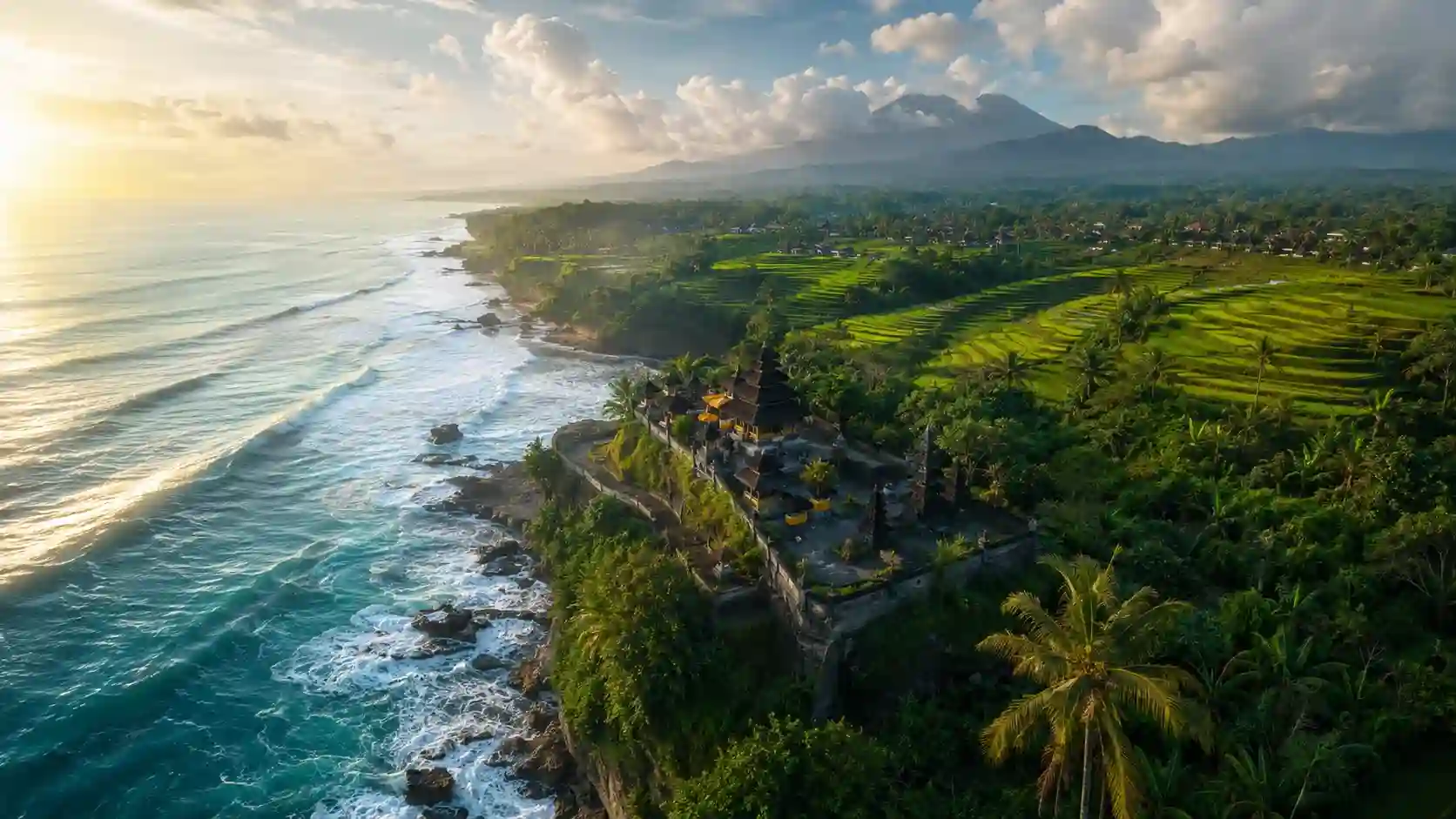
You booked a flight to a tropical island everyone raves about. You arrive at the airport only to realize you landed in the wrong hemisphere. Sounds dramatic, but thousands of travelers confuse Bali’s location every year. Some think it is a country. Others guess Thailand or the Maldives. Knowing exactly where Bali sits on the map prevents costly booking errors, visa mix-ups, and missed connections. This guide settles the question permanently.
Where Is Bali Located on the World Map?
Bali sits in Southeast Asia, nestled within the Indonesian archipelago between the Indian Ocean and the Bali Sea. It rests approximately 8 degrees south of the equator, placing it firmly in the Southern Hemisphere. The island lies between Java on its western side and Lombok on its eastern side.
Pull up a world map and trace your finger across Southeast Asia. Find Singapore, glide eastward past Sumatra and Java, and you will spot a small teardrop-shaped island that is Bali. The island stretches roughly 153 kilometers east to west and 112 kilometers north to south. Its compact size surprises most first-timers. You can drive across it in about four hours.
What Country Does Bali Belong To?
Bali is not a separate country; rather, it is a province of Indonesia. Indonesia holds the title of the world’s largest archipelago, comprising over 17,000 islands. Bali ranks among its most famous destinations. The provincial capital is Denpasar, a bustling city in the southern part of the island.
Indonesia gained independence from Dutch colonial rule in 1945, and Bali became one of its 38 provinces. The island operates under Indonesian law, uses the Indonesian rupiah as currency, and follows national regulations for visas, taxes, and governance. This matters deeply for travelers because entry requirements for Indonesia apply directly to Bali.
Geographic Coordinates and Exact Position
Bali’s precise coordinates are 8.3405° S latitude and 115.0920° E longitude. These numbers place the island roughly 3,300 kilometers northwest of Australia and 1,500 kilometers southeast of mainland Malaysia. Mount Agung, Bali’s highest active volcano, stands at 3,031 meters above sea level near the island’s eastern edge.
The Wallace Line, an invisible biogeographical boundary separating Asian and Australian ecosystems, runs just east of Bali through the Lombok Strait. This gives Bali a distinct mix of flora and fauna from both continental zones.
Regional Breakdown of the Island
Bali divides naturally into distinct regions, each shaped by geography and purpose. Understanding where each area sits helps you choose the right base for your trip.
| Region | Location on Bali | Known For | Best For |
| South Bali | Southern peninsula | Beaches, nightlife, surf breaks | First-time visitors, party travelers |
| Ubud & Central | Mid-island elevated area | Rice terraces, temples, yoga | Cultural explorers, wellness seekers |
| East Bali | Eastern coast and interior | Mount Agung, Amed diving | Divers, spiritual travelers |
| North Bali | Northern coastal strip | Singaraja port, waterfalls | Off-path adventurers |
| West Bali | Western national park zone | Menjangan Island, wildlife | Snorkelers, nature lovers |
| Nusa Islands | Southeast offshore | Crystal bays, cliff views | Day-trippers, photographers |
This table gives you a snapshot of how Bali’s regions spread across the island and what each location offers.
How Far Is Bali from Major Cities?
Distance shapes flight duration and ticket cost. Knowing the travel distance from key global hubs sets realistic expectations.
- Singapore to Bali: 1,670 km, approximately 2 hours 45 minutes flight time
- Perth to Bali: 2,600 km, approximately 3 hours 30 minutes flight time
- Sydney to Bali: 4,600 km, approximately 6 hours 15 minutes flight time
- London to Bali: 12,500 km, typical one-stop journey of 16 to 20 hours
- Los Angeles to Bali: 13,900 km, typical one-stop journey of 20 to 24 hours
- Mumbai to Bali: 5,800 km, approximately 9 hours flight time with one stop
Bali’s Ngurah Rai International Airport in the south handles all international arrivals. The airport sits just 13 kilometers from Kuta Beach, making transfers quick and inexpensive.
Time Zone Information for Bali
Bali operates on Central Indonesia Time, known locally as WITA. This time zone runs at UTC+8 year-round. There are zero daylight saving adjustments. This permanent time setting simplifies planning.
In Bali, at midday, it is:
- 4:00 AM in London
- 11:00 PM in New York the day before
- 2:00 PM in Sydney
- 9:30 AM in New Delhi
This time zone alignment helps travelers coordinate flights, hotel check-ins, and communication with home offices or family.
Physical Geography That Shapes Bali
Volcanic ranges dominate Bali’s landscape. The island sits on the Pacific Ring of Fire, a volatile geological zone responsible for its fertile soil and occasional seismic activity.The two most important volcanic peaks in Bali are Mount Agung and Mount Batur. Both remain active and draw hikers seeking sunrise summit treks.
The central highlands receive heavy rainfall, creating lush rainforests and intricate river systems. The southern lowlands stay drier and house most beach resorts. Black sand beaches cover the eastern and northern coasts, a direct result of volcanic minerals mixing with shoreline sediment. White sand beaches appear more frequently along the southern Bukit Peninsula.
Climate Patterns Based on Location
Bali experiences a tropical monsoon climate with two distinct seasons. The dry season runs from April to October and brings lower humidity, steady trade winds, and peak tourist numbers. The wet season spans November to March, marked by short heavy downpours, higher humidity, and fewer crowds.
The island’s equatorial position ensures average temperatures hover between 26°C and 29°C year-round. Elevation creates microclimates. Ubud sits around 600 meters above sea level and feels noticeably cooler than coastal Seminyak. Pack a light jacket for mountain evenings regardless of the month you visit.
Cultural and Religious Identity Tied to Geography
Bali holds a unique religious identity within Indonesia. Over 85 percent of Bali’s population practices Balinese Hinduism, a distinct blend of Hindu philosophy, Buddhist influences, and indigenous animist traditions. The rest of Indonesia predominantly follows Islam. This distinction gives Bali its iconic temple ceremonies, daily offerings, and spiritual atmosphere.
The island contains over 20,000 temples. Tanah Lot sits on a rocky coastal outcrop. Uluwatu perches on a cliff edge 70 meters above the Indian Ocean. The Mother Temple, Besakih, ascends Mount Agung’s slopes.Each temple’s location ties directly to Balinese spiritual geography and directional cosmology.
Where Is Bali in Relation to Other Indonesian Islands?
Java sits immediately west, separated by a narrow 2.4-kilometer strait. Ferries cross this gap regularly between Gilimanuk in Bali and Ketapang in Java. Lombok lies east across the Lombok Strait, a deeper channel that marks the boundary between Asian and Australasian ecosystems.
The Nusa Islands cluster southeast of Bali’s mainland. Nusa Penida, Nusa Lembongan, and Nusa Ceningan form a popular excursion zone accessible by a 30-minute speedboat ride from Sanur. Further east lie the Gili Islands, technically part of Lombok but closely connected to Bali’s tourism circuit.
Transport Hubs and Access Points
Ngurah Rai International Airport, coded DPS, functions as Bali’s primary entry point. The airport processes over 20 million passengers annually. It sits on a narrow isthmus connecting the Bukit Peninsula to the main island body.
Benoa Harbor handles cruise ships and liveaboard vessels. Padang Bai port serves as the primary ferry terminal for crossings to Lombok and the Gili Islands. Sanur Beach operates speedboat services to the Nusa Islands. These access points make Bali a gateway for broader Indonesian exploration.
Why Knowing Where Bali Is Matters for Travel Planning
Misunderstanding Bali’s location triggers expensive consequences. Flights into the wrong country waste time and money. Packing wrong-season clothing leads to discomfort. Arriving without understanding visa-on-arrival rules for Indonesia causes delays at immigration.
Bali’s position south of the equator means June and July bring cooler dry-season weather, perfect for outdoor exploration. Its location within Indonesia’s visa jurisdiction requires specific passport validity of at least six months. Its proximity to Australia makes it a popular winter escape for Australians, driving peak-season prices during December and January. Geographic awareness directly improves trip quality.
Frequently Asked Questions
Where is Bali located in simple terms?
Bali is an island province of Indonesia located in Southeast Asia, about 8 degrees south of the equator between the Indian Ocean and the Bali Sea.
Is Bali a country by itself?
No. Bali is a province of Indonesia. It uses Indonesian currency, follows Indonesian laws, and requires the same visa process as the rest of Indonesia.
What ocean surrounds Bali?
The Indian Ocean borders Bali’s southern coastline. The Bali Sea lies to the north, and the Lombok Strait flows along the eastern edge.
How long does it take to fly to Bali from Australia?
Direct flights from Perth take about 3 hours 30 minutes. Sydney flights take approximately 6 hours 15 minutes nonstop.
What makes Bali different from the rest of Indonesia?
Bali practices Balinese Hinduism as its dominant religion, unlike most Indonesian islands that follow Islam. This creates a distinct temple culture, festival calendar, and creative arts tradition.
Do I need a visa to enter Bali?
Most nationalities qualify for a visa on arrival valid for 30 days, extendable once. Check current Indonesian immigration rules before booking since policies shift periodically.
Expert Travel Planning Based on Location
Maps alone do not build great trips. Geography applied correctly does. Bali’s compact size means you can base yourself in two locations across a ten-day stay and experience mountains, beaches, and rice terraces without constant repacking. Its southern airport location makes Jimbaran or Nusa Dua logical choices for arrival night accommodations. Its central cultural hub in Ubud rewards those willing to drive 90 minutes inland.
Work with Bali’s geography rather than fighting it. Morning temple visits on the east coast catch sunrise perfectly. Afternoon beach sessions on the west coast end with sunset views over the Indian Ocean. This location-aware approach transforms a standard vacation into a well-paced, memorable journey.
Bali sits exactly where it needs to be for the experience it delivers. Its equatorial warmth, volcanic soil, and spiritual geography create a place unlike anywhere else on Earth. Now that you know precisely where Bali sits on the map, start planning your trip with geographic confidence. Check flight routes from your nearest international hub. Verify your visa eligibility under Indonesian regulations. And choose your base region using the breakdown above to match your travel style.